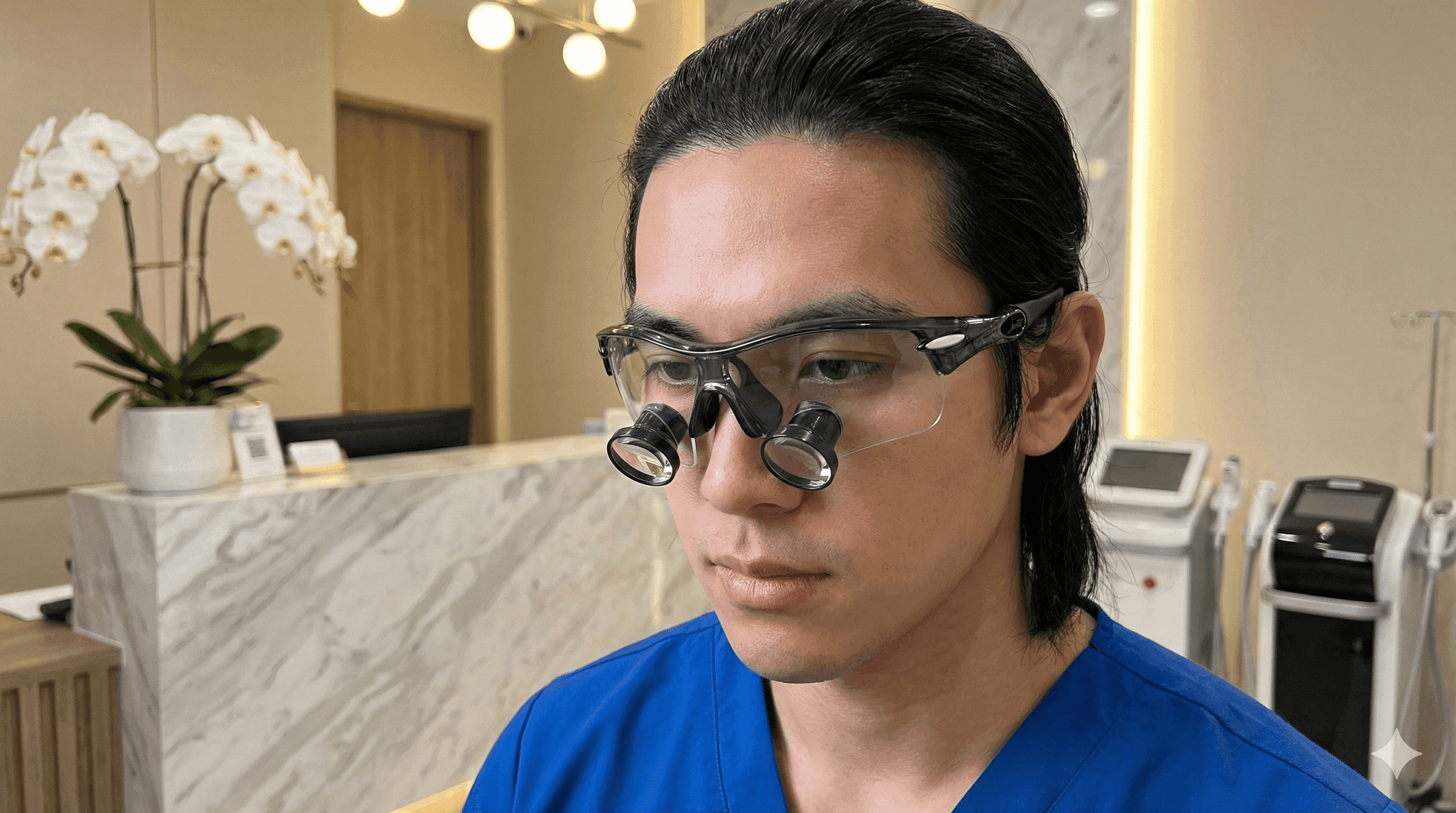
HeliosX lightweight loupes for students and residents

Student comparison

Student Loupe Comparisoncompared without the upsell.

Students need loupes that are affordable enough to start, comfortable enough to wear while learning, and measured well enough that bad fit does not become a hidden tax. HeliosX starts at $270 with Galileo and Newton, documents resident and student discount eligibility across the lineup, and gives every buyer a measurement step before production so the loupes arrive set up for the user.

01

What defines a student loupe

A student loupe has a different job than a senior attending loupe. It needs to be priced for someone funding their own gear during training, light enough to wear through long lectures and clinic days, forgiving enough on field of view that early posture habits do not get punished, and supported well enough that a student does not have to guess on PD or working distance.

Priced for student budgets — entry under $300 with optional protection coverage.
Lower magnification (2.5x–3.5x) for a forgiving field of view while technique is still developing.
Light enough for long teaching days without head-and-neck fatigue.
Backed by clear measurement guidance so a first purchase does not arrive misfit.

02

Where HeliosX sits in the student tier

HeliosX is built specifically to be the brand a student can actually afford during training without compromising on the optical or fitting standard. Galileo and Newton are the entry product lines; resident and student discount eligibility is documented across the lineup; and the same premium optical glass and rigid metal-barrel construction used on the higher-tier models is on the entry models too.

Galileo and Newton from $270 in 2.5x–3.5x — the forgiving range for first-time loupe wearers.
Apollo from $740 and Medusa from $710 as the prismatic upgrade path when residency or post-grad work demands more.
Frame and color variety: H1 and H2 Newton frames, six JJ-series frames for Galileo, plus the broader Apollo lineup as students move up.
Optional protection coverage for loss, damage, and accidental drops — important when loupes live in a backpack across rotations.

03

Brand-by-brand notes for student shoppers

Most of the legacy loupe brands quote student pricing through a dealer or school program; you may not see the price until you sign up for a fitting. Here is qualitative positioning for the brands students typically encounter, so you know what each is known for before you ask for a quote:

HeliosX — published price tiers from $270, documented resident and student discounts, direct shipping, measurement step before production.
Orascoptic — established North American brand with strong dental-school relationships and a wide dealer network.
LumaDent — popular among dental students for value-tier Galilean systems.
SurgiTel — best known for declination-angle ergonomic systems, often introduced at school sessions.
Q-Optics — broad surgical and dental catalog typically routed through dealer or school programs.

04

Buying-decision framework for student buyers

Use this checklist before committing. The first loupe is not the only loupe — it is the one that helps a student build the habit. The decision should be matched to where you are in training, not where you want to be in five years.

Pick the lowest magnification that meets your case mix — usually 2.5x or 3.0x. See /education/loupe-magnification-guide.
Get your PD and working distance measured before you buy. See /measurements.
Check the warranty and whether replacement and protection coverage are included or optional.
Confirm resident or student discount eligibility before placing the order.
Plan the upgrade path — when residency starts and you spend more hours per day in loupes, ergonomic prismatic (Medusa or Apollo) becomes worth the step up.

05

How magnification and posture interact for student work

Higher magnification is not automatically better, especially for students. It narrows the field of view, demands more from your posture, and makes early loupe habits harder to form. Most students do better starting at 2.5x or 3.0x and only stepping up when their case mix actually requires more detail. The /education/loupe-magnification-guide breaks this down by specialty; /education/ergonomic-loupes-neck-pain covers the posture side.

2.5x is the widest field of view — easiest for adaptation and broad clinical work.
3.0x is the most common resident pick — better detail without losing too much field.
Above 3.5x, posture and working distance become more demanding — usually a second-loupe decision, not a first one.

06

Affordable without feeling cheap

A lower price should not force clinicians into vague specs, weak fit support, or disposable optics. HeliosX is built around affordable premium value: clear model roles, fair pricing, and guidance before production begins. A 2004 peer-reviewed survey of 148 specialists and senior trainees (Jarrett PM, Microsurgery 2004;24:420–422) documented the intraoperative magnification ranges that real surgeons actually use — useful context when comparing brand claims against case-mix reality.

Source: Jarrett PM. Intraoperative magnification: who uses it? Microsurgery. 2004;24:420–422.

Transparent product roles and price ranges.
Measurement guidance for pupillary distance and working distance.
Education-first buying support for students, residents, dentists, and surgeons.

Buyer criteria

Choose by work, posture, and fit.

A useful loupe guide answers the real buying question. Start with the procedures you perform, then compare optics around posture, magnification, fit support, and price.

Workflow

Which procedures, appointments, or cases will these loupes support most often?

Posture

Do you need ergonomic prismatic viewing or adjustable working distance?

Magnification

How much detail do you need before field of view becomes too narrow?

Fit

Do you have accurate pupillary distance, working distance, and prescription details?

Budget

Are you buying for school, residency, practice, or a focused upgrade?

Support

Can you easily get help with measurements, shipping, prescription, and setup?

Side-by-side

Comparison snapshot

Side-by-side comparison of HeliosX and other brands across 10 positioning factors.
FeatureHeliosXOther brands
Entry pricingGalileo and Newton from $270, published openlyStudent pricing varies by dealer, school, or promotion
Resident and student accessDocumented discount eligibility across the entire lineupDiscount programs vary by brand partner
Magnification range for first buyers2.5x–3.5x at entry on Galileo and Newton; 3.0x–8.5x prismatic upgrade path on MedusaEntry catalogs vary by brand
Frame and color optionsH1/H2 Newton frames; six JJ-series Galileo frames; full Apollo lineup for the upgrade pathFrame catalogs vary by configuration
Build qualityPremium optical glass with multi-layer coatings and rigid metal barrels on entry models tooEntry-tier construction quality varies by brand
Measurement supportPublic PD and working-distance guides, measurement step before productionFit support may depend on rep, dealer, or office visit
Shipping modelDirect-to-clinician with one-business-day support responseDealer or school-program routing typical
Replacement and warrantyWarranty with replacement and lens-update pathsWarranty terms vary by brand
Protection coverageOptional coverage for loss, damage, and accidental drops at orderProtection plans vary by brand
Upgrade pathSame brand, same support team, from Galileo at $270 to Medusa or Apollo when residency startsUpgrade often means switching brands or sales channels

HeliosX is built for student buyers who need affordability now — Galileo and Newton from $270 with documented resident discounts — and a credible ergonomic prismatic upgrade path (Medusa and Apollo) as the clinical workload becomes more demanding.

Questions

Quick answers

What magnification should students start with?

Most students start at 2.5x or 3.0x because the wider field of view is easier to adapt to while technique is still developing. Galileo and Newton both run 2.5x–3.5x and start at $270. See /education/loupe-magnification-guide for the full specialty breakdown.

Are cheap student loupes a good idea?

Very cheap loupes often create fit, support, and optics problems that cost more later. HeliosX positions affordable premium loupes — same optical glass and rigid metal-barrel construction as the higher-tier models, just at the lowest entry price in the premium-build tier — as the better student path.

Does HeliosX offer resident and student discounts?

Yes. Resident- and student-friendly pricing is documented across the lineup with explicit discount eligibility. Email heliosxloupes@gmail.com with your training program details to confirm eligibility and apply.

Should a student buy a prismatic loupe or wait?

Most students do well starting with Galilean entry models (Galileo or Newton) and adding an ergonomic prismatic pair (Medusa or Apollo) when residency or post-grad volume makes posture more demanding. Both paths use the same support team and the same measurement process.

What if my loupes get damaged during rotations?

Every order is covered by a warranty that includes replacement and lens-update paths. Optional protection coverage for loss, damage, and accidental drops is available at order — useful when loupes live in a backpack across rotations. See /warranty for the full policy.

What measurements do I need to submit for HeliosX loupes?

Pupillary distance and working distance. The customer measurement flow is emailed after checkout and includes step-by-step instructions, smartphone-app recommendations, and manual measurement guidance. Prescription customers also submit a current eyeglass prescription.